
← Back to the blog
property documents Ghana
Property Documents Checklist for Ghana Homebuyers
A property documents checklist for Ghana homebuyers: title deeds, indentures, permits and the sale agreement to verify before you buy.

Before you pay for any home in Ghana, you need four things in hand: proof the seller owns the land, an official Lands Commission search confirming it, a valid building permit, and a sale agreement drafted by a lawyer. Getting these property documents in Ghana right is what separates a clean purchase from years in court. This homebuyer checklist walks through each document, who signs what, and how to keep your records safe once the keys are yours.
The stakes are real. Land disputes dominate the courts here, so paperwork is not a formality. It is your defence.
Why property documents in Ghana carry so much weight
Roughly 90% of cases heard in Ghanaian courts relate to land conflicts, according to a 2024 land governance workshop in Accra (MyJoyOnline, 2024). That single figure explains why document verification matters more here than almost anywhere else. A beautiful house means nothing if the title underneath it is contested.
Most of these conflicts trace back to the same roots: land sold twice, forged signatures, unclear family ownership, or a seller who never held the right to sell. Every one of those problems is detectable in the documents, if you know what to ask for and check it against the official record.
The homebuyer checklist below assumes you are buying a finished or semi-furnished home rather than raw land. The principles stay the same, but a built property adds permits and planning approvals to the list.
Essential documents every buyer must review
At minimum, insist on five documents before money changes hands: the seller's proof of ownership, an official Lands Commission search report, the indenture, the building permit with approved drawings, and the lawyer-drafted sale agreement. Treat any missing item as a reason to pause, not a detail to sort out later.
Here is the working checklist:
- Proof of ownership: a title deed, land certificate, or a properly executed indenture tracing back to the original grantor.
- Lands Commission official search report: dated, stamped, and confirming the registered owner and any encumbrances.
- Site plan and cadastral plan: signed by a licensed surveyor, showing the exact coordinates and boundaries of the plot.
- Building permit and planning approval: issued by the district or municipal assembly, with stamped architectural drawings.
- Sale and purchase agreement: drafted by a lawyer, stating the price, parties, and completion terms.
- Tax and utility clearances: proof that property rates and utility bills are settled up to the sale date.
Cross-check the owner's name across every document. A mismatch between the indenture, the search report and the permit is a warning sign worth investigating before you proceed.
Title deed, indenture and land certificate explained
These three terms get used loosely, but they mean different things, and confusing them costs buyers money. A title deed proves ownership, an indenture records a transfer between parties, and a land certificate is the formal state document issued only when land is registered under Ghana's title registration system.
That distinction matters because formal title registration remains rare. Less than 2% of Ghana's land is covered by title registration, and only three regions, Greater Accra, Ashanti and Central, currently have registration districts (Ghana Law Hub, 2024). Most of the country still operates under deeds registration instead.
What this means in practice:
- If the property sits in a registration district, ask for the land certificate. It offers the strongest protection the system provides.
- Elsewhere, you will usually see a registered indenture lodged with the Lands Commission under the deeds system. That is normal, but it makes the official search even more important.
- An indenture alone, without a confirming search, proves only that a document exists. It does not prove the seller's right to sell.
For a deeper walkthrough of confirming ownership before you commit, read our guide on how to verify land title in Ghana and avoid litigation. The search at the Lands Commission is the step that catches double sales and hidden disputes, and no document on the seller's side substitutes for it.
Developers who hold a clean, registered title for an entire scheme simplify this for buyers. At Aseda Village, homes sit within a single planned community with documented title, so the chain of ownership is one you can trace rather than reconstruct plot by plot.
Verifying building permits and planning approvals
A building permit confirms that the structure you are buying was approved and built legally. Ask for the stamped permit, the approved architectural drawings, and the development or planning permission from the relevant district or municipal assembly. Then confirm them directly with that assembly's physical planning department rather than trusting a photocopy.
An unpermitted building is a liability you inherit. The assembly can order alterations, impose penalties, or in serious cases mark the structure for demolition. When you verify, check three things:
- The permit matches the plot number and coordinates on the site plan.
- The owner's name on the permit matches the seller and the indenture.
- The approved drawings reflect what was actually built, with no unapproved extensions.
For a newer property, the paper trail should be recent and complete. For an older one, ask whether any additions were made after the original approval, and whether those additions were permitted separately.
A completed home with permits already in order removes a layer of risk that self-builds carry from day one. When you compare a built home against putting up your own, approved permits are part of the value you are paying for, not an afterthought to chase later.
Who prepares and signs the sale agreement
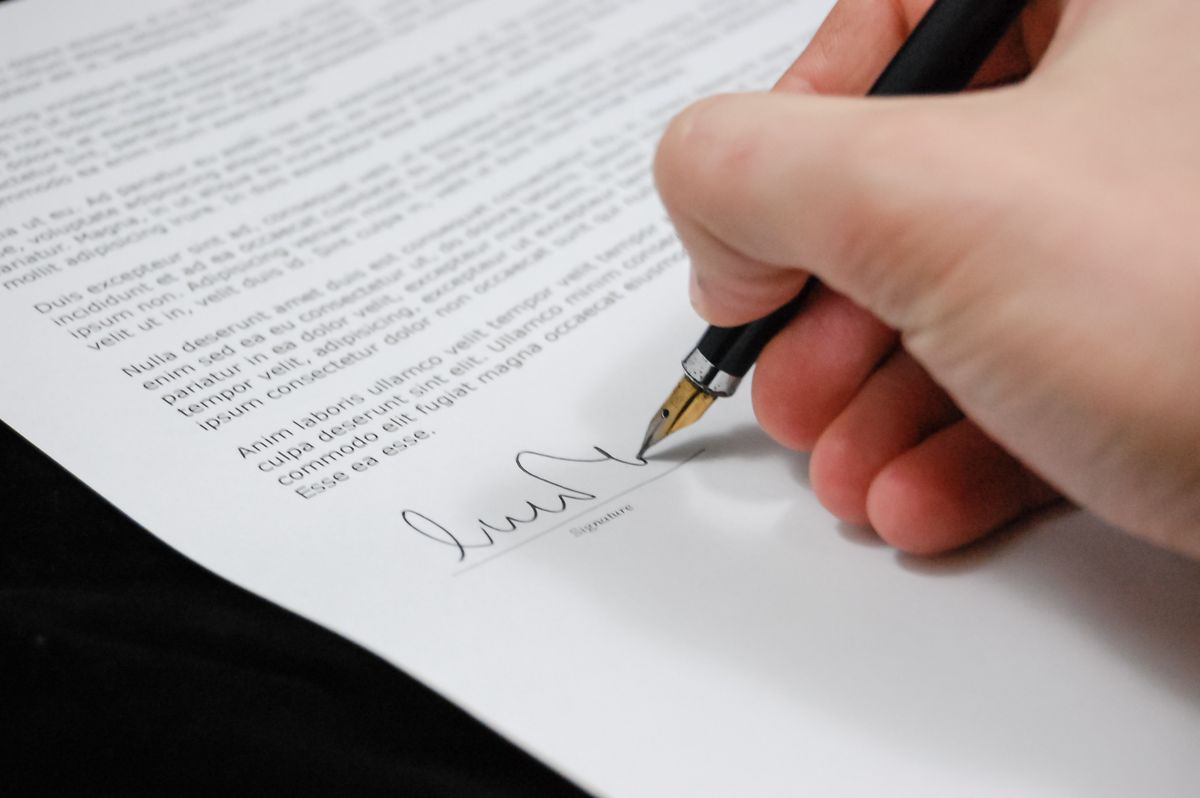
A licensed lawyer should prepare the sale and purchase agreement, and ideally one who represents you rather than the seller. Both parties sign it in the presence of witnesses, and the same lawyer typically handles the conveyance deed and the Lands Commission registration that follows. Never sign an agreement drafted solely by the seller's side without independent review.
The agreement should state, at a minimum:
- The full legal names of buyer and seller.
- The exact property, with plot number and site plan reference.
- The purchase price and the payment schedule.
- What is included in the sale, which matters for a semi-furnished home.
- The completion date and what each party must deliver at closing.
For a semi-furnished purchase, spell out the fittings and furniture covered so there is no dispute at handover. Ask for an itemised schedule of everything included, from kitchen units to wardrobes, attached as a signed annex to the agreement.
After signing, the lawyer prepares the deed of transfer and submits it for registration. Do not treat a signed agreement as the end of the process. Registration is what records your ownership in the official system, and until that completes, your claim rests on the contract alone.
Keeping records safe after purchase
Once the sale completes, store certified originals, high-resolution scans, and a written summary of the ownership chain in at least two separate places. Documents get lost, offices flood, and originals go missing. A buyer who can produce a clean file years later is a buyer who sleeps well.
A practical system looks like this:
- Keep certified true copies of the title deed or land certificate, the registered indenture, the permit, and the stamped sale agreement.
- Store colour scans in secure cloud storage, plus an offline backup on an encrypted drive.
- Write a one-page ownership timeline listing each prior owner, the transfer dates, and the document that records each step.
- Note your registration reference numbers and the dates you filed with the Lands Commission.
Diaspora buyers should keep a trusted local contact, often the same lawyer, who can access the physical file and respond to the assembly or Lands Commission if a question arises while you are abroad. If you are managing a purchase from overseas, agree in advance how remote signing, power of attorney, and document handling will work so nothing stalls while you wait for a courier.
Your next concrete step is simple: build the checklist from this article into a single document request, and send it to the seller or developer before you view the property a second time. If the full set comes back clean and the Lands Commission search confirms it, you are buying a home. If pieces are missing, you have found out early, which is exactly what this checklist is for.